
More Than Just a Paw-sitive Experience: How Pic-A-Talk Empowers Animal-Assisted Sessions
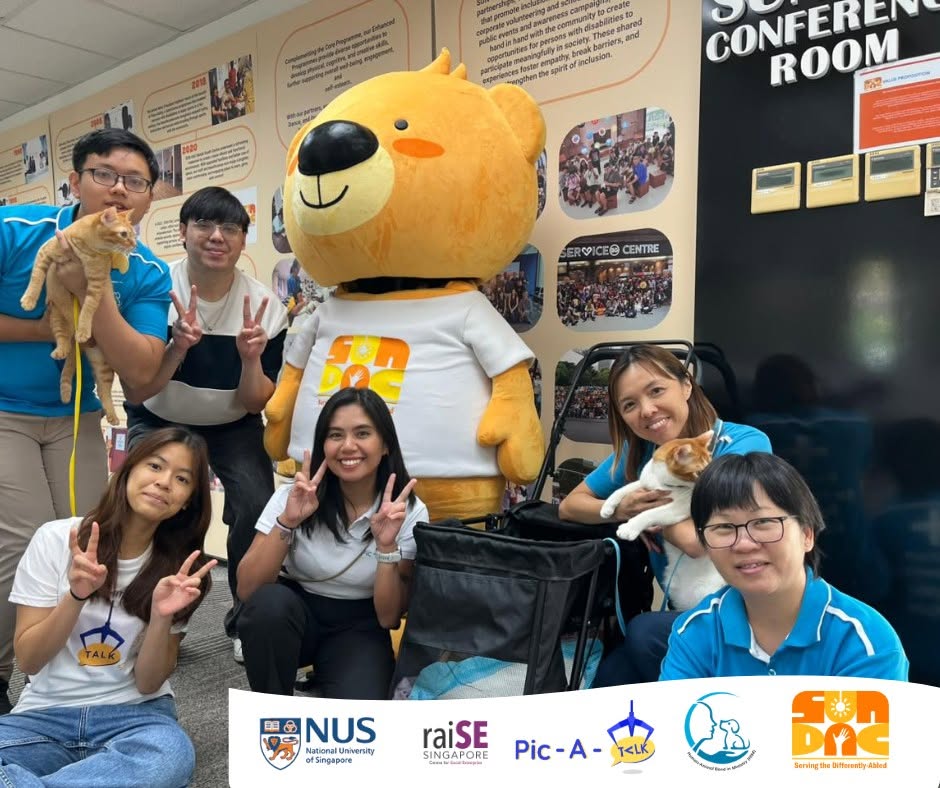
There’s a different kind of energy in the room when a therapy animal walks in. You can feel the shift in the air. The mix of excitement, curiosity, and sometimes a little bit of uncertainty. This March, Pic-A-Talk had the privilege of being part of a meaningful collaboration with Human-Animal Bond in Ministry (HIM) and SUN-DAC, where communication, compassion, and connection came together through Animal-Assisted Activities (AAA).
More than just introducing a communication tool, this collaboration explored how preparing participants emotionally, setting clear expectations, and supporting boundaries can transform the way they experience animal-assisted sessions. It was a journey not only of interaction but of growth, where each session built confidence, familiarity, and a stronger sense of voice.
Bridging Hearts: About HIM x SUN-DAC
At the heart of this pilot collaboration is a shared mission to create inclusive spaces where every individual can connect, express, and be understood. Human-Animal Bond in Ministry (HIM) is a Singapore-based social enterprise that partners with SUN-DAC to deliver Animal-Assisted Activities (AAA) for persons with disabilities. With therapy animals, these sessions create meaningful opportunities for emotional connection, engagement, and social interaction in a safe and supportive environment.
This collaboration with SUN-DAC, a voluntary welfare organisation providing specialised care and training for persons with disabilities across Singapore, brings together care, community, and innovation. Operating across centres in Choa Chu Kang, Upper Thomson, and Bedok South, SUN-DAC supports individuals with diverse needs, making inclusion not just an intention, but a daily practice.
Preparing for Interaction: How Pic-A-Talk Supports AAA Sessions
Animal-Assisted Activities are not just about interaction. For many, engaging with animals can bring excitement, curiosity, and sometimes uncertainty. Understanding how participants feel before, during, and after these moments is just as important as the interaction itself.
This is where Pic-A-Talk played a key role.
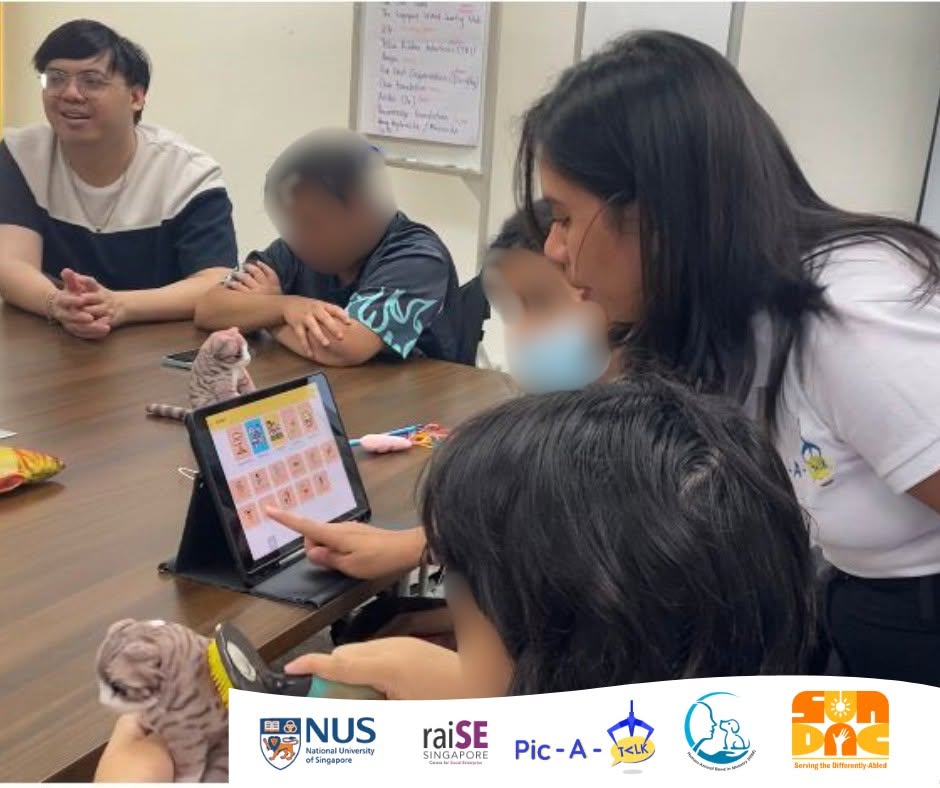
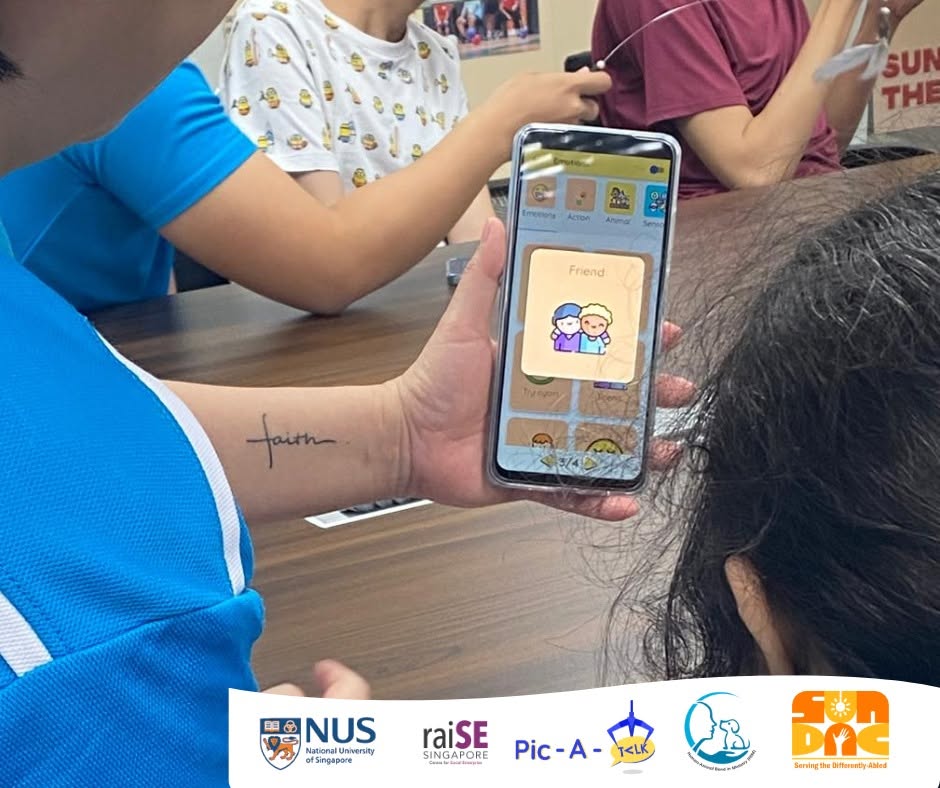
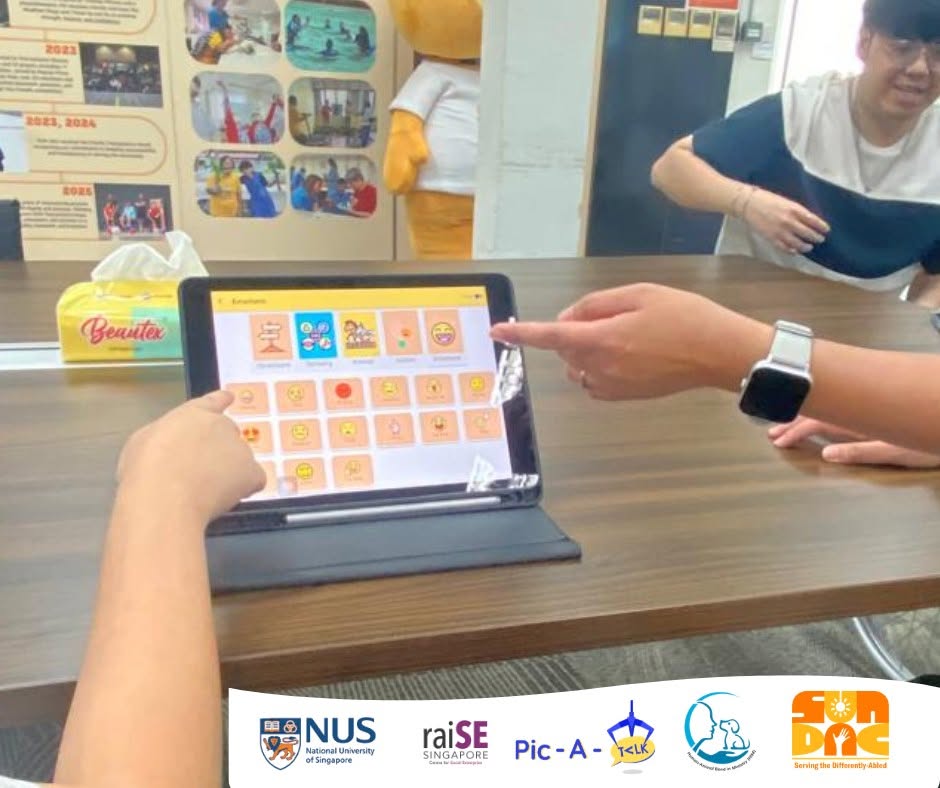
At the start of each session, participants were guided through an emotional check-in using Pic-A-Talk by selecting how they felt – whether happy, calm, excited, or even tired. Participants were able to express their emotional state in a simple and accessible way. This provided valuable insight regarding better support, adjustable pacing, and a more personalised environment.
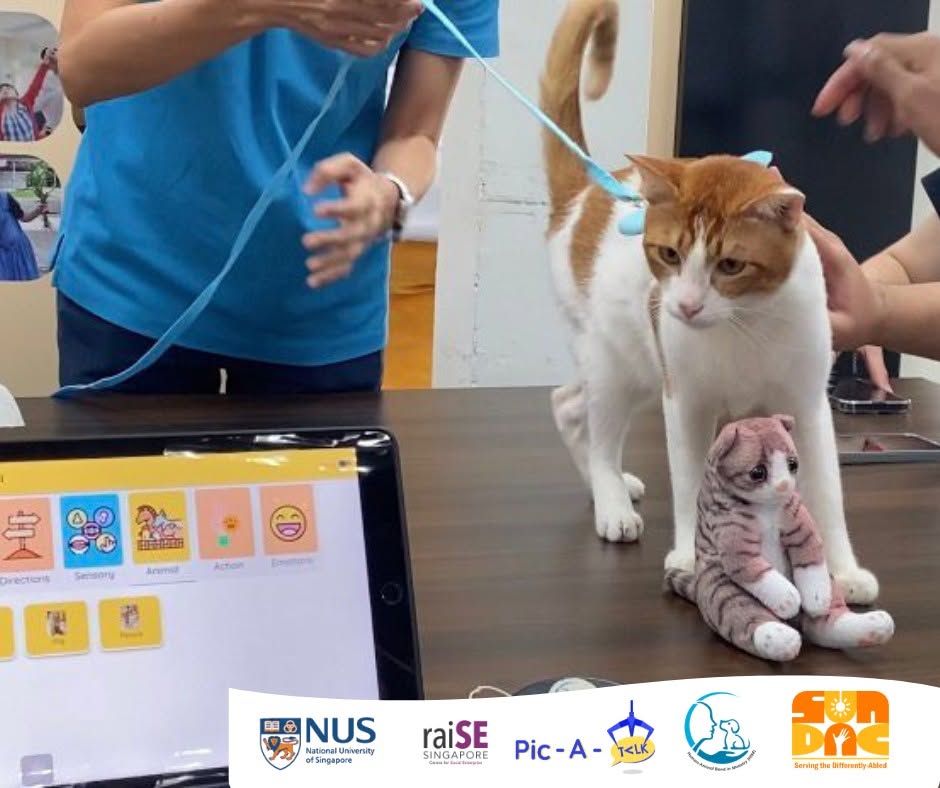
Before interacting with the animals, participants were also introduced to key action words: pet, feed, play, and brush. This helped them understand what activities to expect and, more importantly, gave them the ability to choose how they wanted to engage. With clearer expectations, participants were able to approach the session with greater confidence and less uncertainty.
Equally important was preparing participants for the sensory nature of the activity. Through Pic-A-Talk, concepts such as soft, loud, space, stop, and break were introduced to support awareness of personal boundaries. This allowed participants to communicate their comfort levels, express when they needed a pause, and engage with the animals in a way that felt safe and respectful.
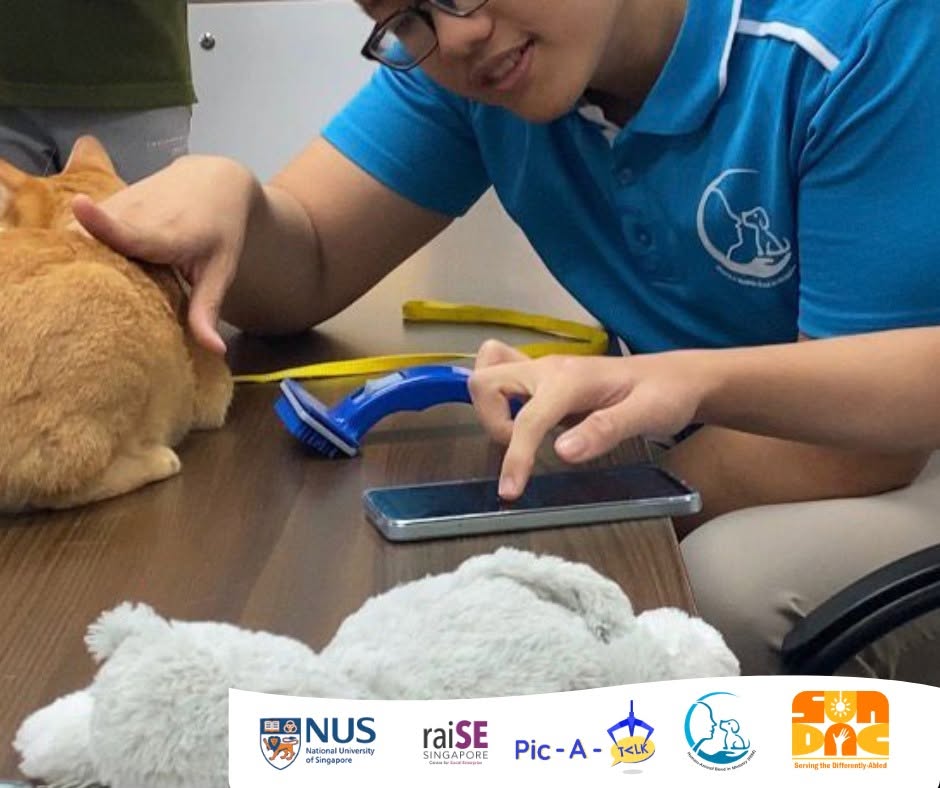
Throughout the session, Pic-A-Talk remained available as a supportive communication tool. Participants used it to express their preferences, indicate what they wanted to do, and communicate both enjoyment and discomfort in real time. This shifted the experience from passive participation to active engagement, where interactions were not only guided but also understood.
For a more in-depth experience, check out CEO Uma’s vlog here.
A Journey of Growth: From First Session to Last
From the very first session, it was clear that Pic-A-Talk had the potential to change participants’ engagement during Animal-Assisted Activities. In our first session on 12 March, participants were introduced to the Pic-A-Talk AAC tool to express emotions, make choices, and communicate their preferences while interacting with the animals.
For many, it was their first time using the app, and yet they were already beginning to connect symbols with real-life actions and experiences. Even in that initial session, meaningful communication moments began to emerge. Some participants were able to independently select icons such as happy, pet, and feed, while others engaged with the support of facilitators and volunteers.
When we reconnected with the same group in the final session on 26 March, it was encouraging to observe early signs of progress. Several participants showed increased familiarity and confidence in using Pic-A-Talk. Some were able to recognise icons more quickly, select the correct words more easily, and navigate the app with less hesitation. Some participants were even able to toggle across categories and communicate their thoughts more clearly, demonstrating how even limited repeated exposure can support growing confidence and understanding.
While some participants still required guidance in locating words or navigating categories, there was a noticeable increase in engagement and comfort.
Moments That Matter, Impact We Saw, Communication Beyond Words
Throughout the sessions, we witnessed small but powerful moments that reminded us how meaningful communication can be, even when it does not happen through speech alone.
Participants used Pic-A-Talk to identify their emotions, express activity preferences, and communicate what they wanted to do with the animals. Some selected feelings, such as happy, while others used action words like “pet” and “feed” to show how they wanted to participate. These moments may seem simple, but they represented something more: the ability to make choices, be understood, and take part in the session more actively.
One particularly meaningful moment involved a nonverbal participant repeatedly selecting the word “pet”. At first, it seemed she wanted to pet the cat, but with the insight of a volunteer familiar with her, it became clear that she was actually asking for someone to pet her head as a form of self-soothing. With Pic-A-Talk’s support, her intention became easier to understand, allowing facilitators to respond with greater care and sensitivity.
Volunteers also shared how helpful Pic-A-Talk was in supporting communication, especially for those working with participants for the first time. It gave them a clearer way to understand emotions, interpret preferences, and guide interactions more smoothly. For some participants, the app became a bridge between them and the facilitators. The impact of the sessions was seen not only in communication but in confidence, comfort, and connection. Participants were given a way to prepare emotionally, understand what would happen, and express their needs in real time. This made the sessions more inclusive, more responsive, and more empowering for everyone involved.
Looking Ahead: A Meaningful First Step Forward
As Pic-A-Talk’s first pilot partnership in Singapore, this collaboration marks an important and encouraging milestone in our journey.
Working alongside HIM and SUN-DAC gave us the opportunity to see firsthand how accessible communication tools can enrich real-world experiences where emotional readiness, sensory comfort, and meaningful participation matter so deeply.
We are deeply grateful to HIM, SUN-DAC, and all the volunteers who made these sessions possible. Your openness and patience created a space where participants could feel supported, understood, and empowered.
As we look ahead, we carry with us the lessons, growth, and meaningful moments from this pilot. More than just a collaboration, this was a first step toward building more inclusive experiences.
This is just the beginning of our journey in Singapore. We’re walking away with deep lessons and even deeper motivation to keep building a world where every voice has a place.
For more information about the event and to see some highlights, you may check it out here.
We continued to conduct more sessions with HIM and SUN-DAC, which you can view here: